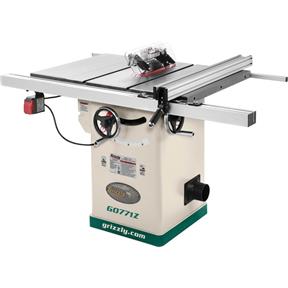
3 HP cabinet table saw

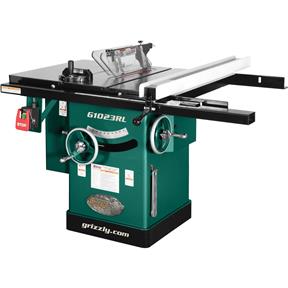
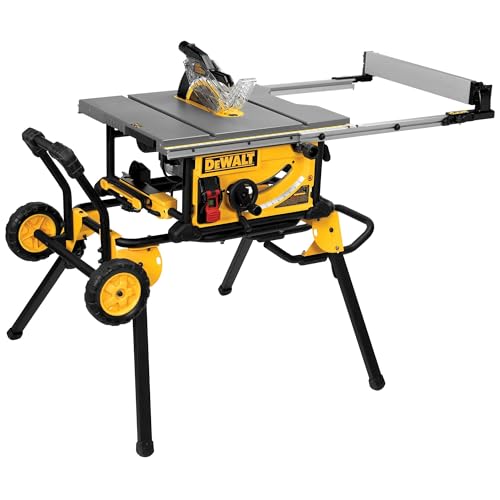
The 3 HP cabinet saw needs a 240V circuit. The Amazon pick is the nearest contractor-class alternative; check its listing for voltage, since the saving is only real if it runs on a circuit you already have.
Calculator
A one-car garage (12 x 20 ft clear) holds a hybrid table saw, bandsaw, cyclone collector, drill press, 6 ft bench and compressor when no car is inside, and about one machine when a sedan is parked in it. A two-car 24 x 24 holds the same seven machines and still parks a sedan. The calculator packs your machine list around the vehicle and the overhead door, keeps operator room in front of each machine, and tells you what to leave out.
7 of 7 machines fit
One workable arrangement, not the only one. Each machine keeps its operator zone (dashed orange) clear of other machines. Numbered key: 1 Hybrid table saw (64 x 41 in) / 2 14 in bandsaw (25 x 18 in) / 3 Cyclone dust collector (44 x 28 in) / 4 15 in benchtop drill press (20 x 12 in) / 5 20 gallon compressor (28 x 20 in) / 6 6 ft workbench (72 x 24 in) / 7 Steel shelving unit (60 x 24 in). Machine sizes are listing figures where we have them and planning allowances where we do not.
These cards follow your result: one for each machine that fits, with the Amazon pick and the Grizzly pick side by side, then what the layout needs around them.
The 3 HP cabinet saw needs a 240V circuit. The Amazon pick is the nearest contractor-class alternative; check its listing for voltage, since the saving is only real if it runs on a circuit you already have.
Both are 10 in saws in the 1-3/4 to 2 HP class. Pick Amazon for the SawStop contractor saw; pick Grizzly for an enclosed cabinet hybrid you can order direct and wire for 120V or 240V.
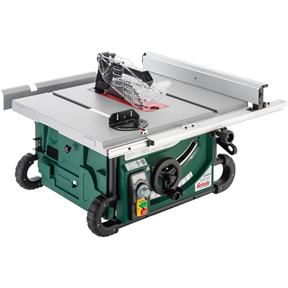
The Amazon pick is a jobsite saw with a folding rolling stand you can stow against a wall; the Grizzly saw is a heavier variable-speed benchtop that stays on its bench.
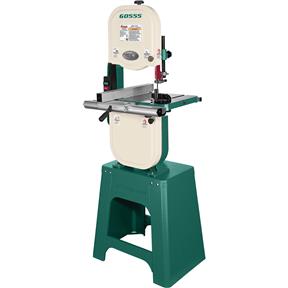
Both are 14 in, 1 HP saws that run on 120V. The Grizzly saw is the established cast-iron-table pick; the Amazon pick is dual-voltage and ships to your door.
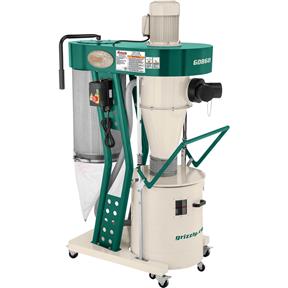
The Grizzly G0860 is a two-stage cyclone on 120V with a 1 micron canister; the Amazon pick is a bag-style 1 HP machine. The cyclone costs more and keeps the filter clean far longer.
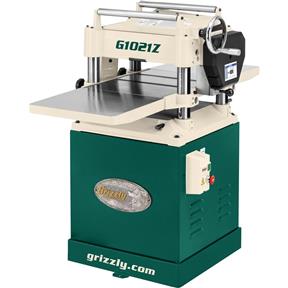
The Amazon pick is a benchtop 13 in planer on 120V; the Grizzly G1021Z is a 15 in, 3 HP planer on a cabinet stand and a bigger step up in floor space and circuit.
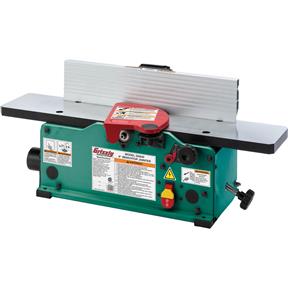
Both are 6 in benchtop jointers. The Grizzly lists 1-1/2 HP and 22,000 cuts per minute; the Amazon pick has a spiral cutterhead.
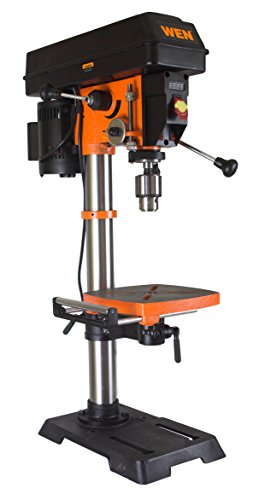
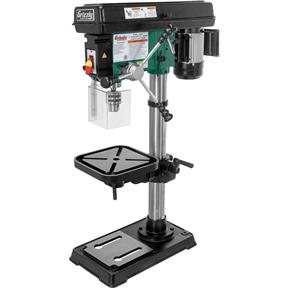
Both are benchtop drill presses on a 120V cord. The Grizzly lists a 15 in swing with an LED light and laser guide; the Amazon pick is a 12 in size at a lower entry cost.
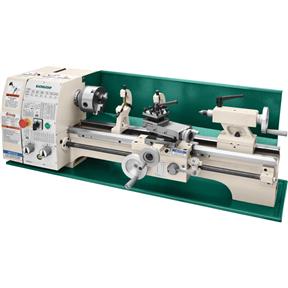
The Grizzly G0602 is a 10 x 22 with an enclosed gearbox and 432 lb of weight on a footprint of about 4 ft by 1 ft; the Amazon VEVOR 7 x 14 is the lightweight entry alternative.
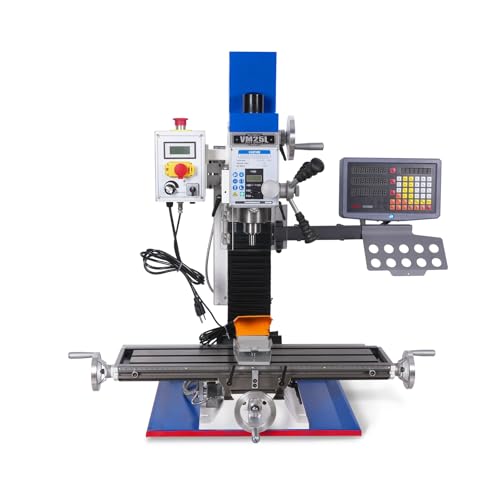
Both are 7 x 27 class benchtop mills with an R-8 spindle. The Grizzly G0704 ships with a stand and a listed weight of 372 lb.
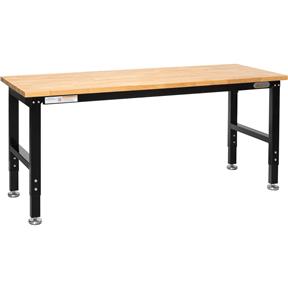
Choose the Amazon bench to keep spending down; choose the Grizzly bench when you run power tools on it every weekend and want the built-in outlets.
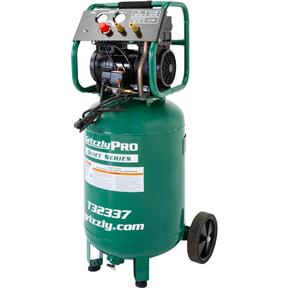
Both are oil-free, quiet-series 20-gallon compressors, so they are tolerable in an attached garage. Pick on the sale, the warranty path and the noise rating you can live with.
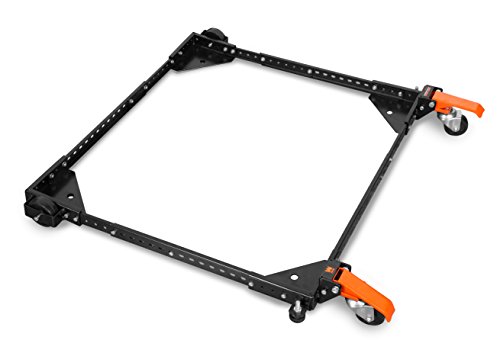
A saw, bandsaw, lathe or mill on a mobile base can roll to the wall when the car comes home. Check the weight rating in each listing against your machine.

Your list makes chips and fine dust and nothing in it collects them. A cyclone on 120V, or a separator ahead of a shop vacuum, is the usual fix.
The Grizzly G0860 is a two-stage cyclone on 120V with a 1 micron canister; the Amazon pick is a bag-style 1 HP machine. The cyclone costs more and keeps the filter clean far longer.
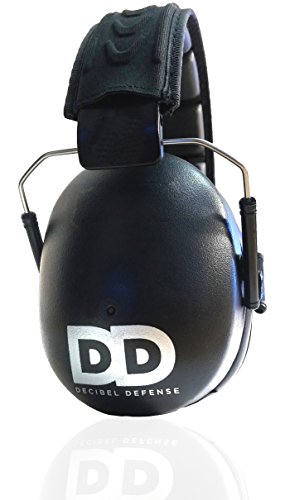
A hanging filter cleans what the collector misses. Wear a respirator and safety glasses at every machine.
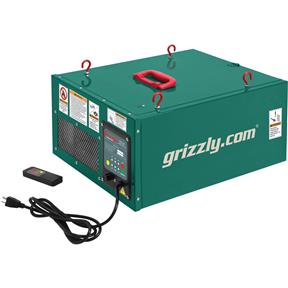
Both are 3-speed ceiling-hung filters in the 300 to 400 CFM class with remotes. The Grizzly unit is owner-rated 4.8 on grizzly.com across 301 reviews.
A layout with this many circuits usually means a subpanel. A licensed electrician sizes and installs it; the tester checks each outlet afterwards.
Machines the layout left out are not listed. Prices change often and Grizzly runs sales, so the buttons show current prices.
Matched to this result.


Prices change often; the button shows today's price on Amazon.
We email a link back to this calculator and the next step for a shop this size. Your layout stays saved in this browser, so the link reopens it. A few short emails follow, then a couple a month at most.
Unsubscribe anytime. You can also just read the checklist on this site.The calculator places machines one at a time against the walls, largest and most important first, and keeps a 24 to 30 in operator zone in front of each floor machine. Two zones may share the same aisle, but no machine may sit inside another machine's zone. A 24 in strip in front of the overhead door stays empty so the door and a dolly can clear, and a parked vehicle carries a 30 in walk-around on each side and 18 in at each end. The result is one workable arrangement, not the only one.
Machine sizes are listing figures where we have them (for example the Grizzly G1023RL cabinet saw at 66 x 47 in overall, the G0771Z hybrid at 64 x 40.5 in and the G0555 bandsaw at 24.5 x 17.5 in) and labelled planning allowances where we do not.
A mid-size sedan is about 16 ft long, so in a 20 ft deep one-car bay it leaves 4 ft: 12 in for the door gap and 3 ft behind the nose. That strip holds a bandsaw or a shelf, not a table saw. Add a second bay and the car costs you a lane, not the whole garage: the layouts section shows each garage size with and without a vehicle.
A table saw is only useful if the board has somewhere to go. For 8 ft stock the calculator measures the clear run through the saw in both directions and compares it with the length you need (the saw's depth plus about 1.5 times the stock). When the answer is short, the fix is a mobile base and rolling the saw out when the car is gone: the mobile base calculator sizes it.
Not with a sedan 16 ft long in a 12 x 20 ft bay: only about 3 ft remains behind the bumper. A jobsite or open-stand saw that rolls out when the car leaves is the workable answer, and the calculator will show you whether it parks anywhere at all.
It is the operator zone, the space you stand in to run that machine. Zones can overlap each other because two machines can share an aisle, but a zone may never cover another machine or a parked vehicle.
Where a size comes from a manufacturer listing we use it exactly. Where it does not, the plan uses a planning allowance for that kind of machine and says so. Always check your own machine's footprint, including fence rails and extension wings.
This page is researched guidance, not professional electrical, engineering or safety advice. Circuits, loads and clearances depend on your house, your service and your town: have a licensed electrician confirm any wiring, and check local code and each manufacturer's manual before you act.